
KI für den modernen Vertrieb
Finden Sie mit unserer KI-Plattform präzise die Unternehmen und Kontakte, die zu Ihnen passen. Automatisieren Sie Ihre Kaltakquise und fokussieren Sie sich auf den Abschluss.

B2B Sales & AI Learning Hub

Impulse, Analysen und Trends für Führungskräfte im B2B Vertrieb

Corporate Strategy

By Alexander Weltzsch
December 10, 2025 7:00 AM

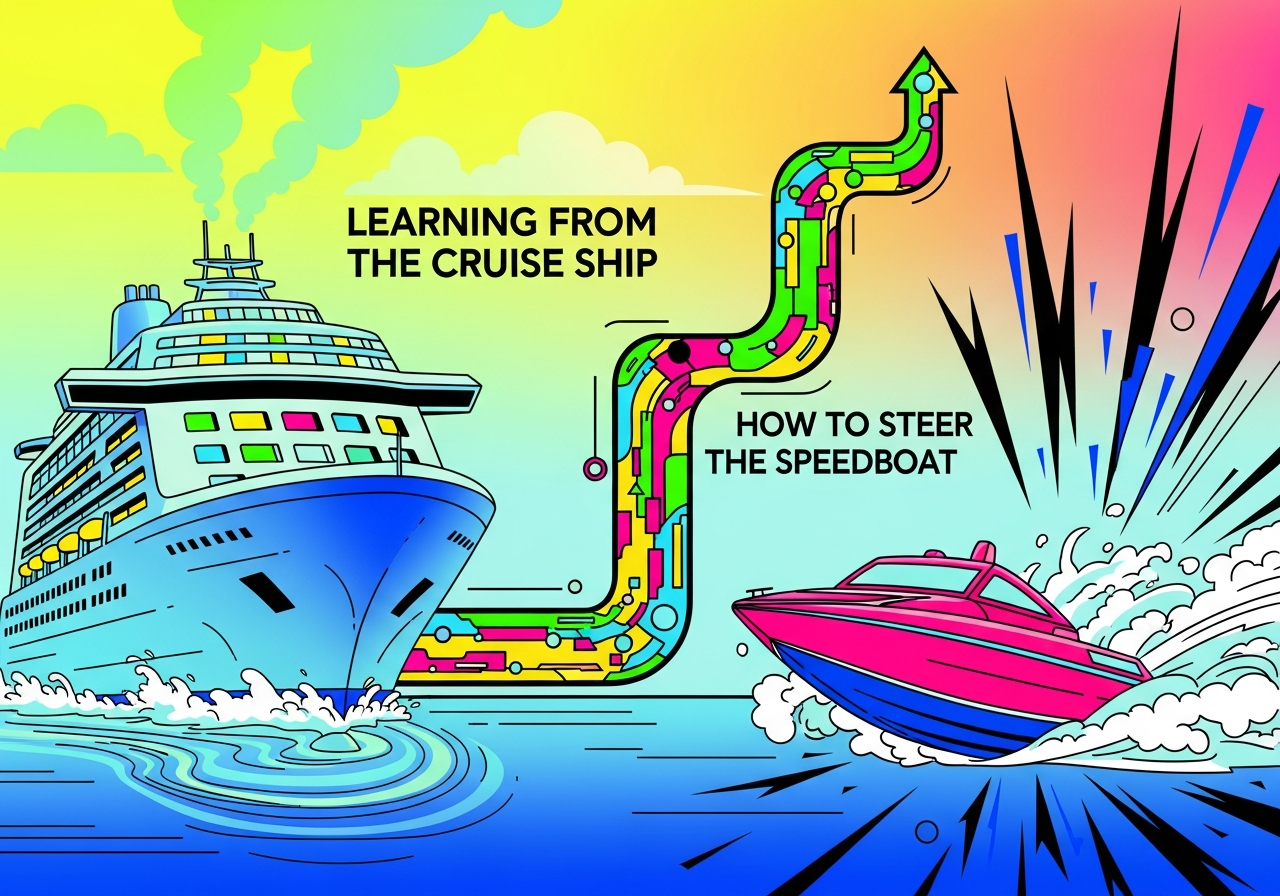
Vom Tanker lernen, wie man das Schnellboot steuert: Die KI-Strategie von Mercedes-Benz als Blaupause für den Mittelstand

Während der deutsche Mittelstand oft noch auf den perfekten, risikofreien Anwendungsfall wartet, schafft der Industrieriese Mercedes-Benz durch ritualisierte Lernkultur bereits Fakten. In der aktuellen Folge des Handelsblatt Disrupt Podcasts gibt CIO Katrin Lehmann einen seltenen Einblick in den Maschinenraum der Transformation. Ihre These ist provokant wie simpel: Echte Innovation benötigt keine riesigen Budgets, sondern „Rock Solid Operations“ und die Disziplin, das Lernen zur Routine zu machen. Wir haben die Episode analysiert und leiten daraus ab, warum KMUs ihre Agilität oft verspielen und wie sie die Strategie des Automobilkonzerns adaptieren können, um künstliche Intelligenz nicht nur zu installieren, sondern kulturell zu verankern.

Header Image
KI für den modernen Vertrieb
Finden Sie mit unserer KI-Plattform präzise die Unternehmen und Kontakte, die zu Ihnen passen. Automatisieren Sie Ihre Kaltakquise und fokussieren Sie sich auf den Abschluss.

Das Fundament der Innovation: Warum „Rock Solid Operations“ vor der Vision kommt

Es ist ein weit verbreiteter Irrtum in vielen Chefetagen mittelständischer Unternehmen, dass KI-Projekte an fehlender Kreativität oder mangelnden Visionen scheitern. Hört man Katrin Lehmann, der CIO von Mercedes-Benz, im Gespräch mit Larissa Holzki zu, wird schnell klar, dass das wahre Hindernis oft viel banaler ist: Es fehlt die operative Stabilität. Lehmann betont in dem Podcast unmissverständlich ihre wichtigste Aufgabe: „Meine wichtigste Aufgabe ist, das Unternehmen am Laufen zu halten.“ Sie nennt dies „Rock Solid Operations“. Ohne eine stabile Infrastruktur, ohne funktionierende Cybersicherheit und ohne verlässliche IT-Systeme ist jede KI-Initiative zum Scheitern verurteilt. Für den Mittelstand, der oft dazu neigt, Leuchtturmprojekte auf wackliger IT-Architektur zu errichten, ist dies ein entscheidender Weckruf. Innovation ist keine Flucht aus dem Tagesgeschäft, sondern dessen Veredelung. Lehmann macht deutlich, dass man erst „schwimmen lernen“ muss, bevor man surfen kann. Sie vergleicht ihre Karriere und die technologische Adaption mit ihrer Zeit als Leistungsschwimmerin: Man springt ins kalte Wasser und schwimmt, so schnell man kann. Doch das Wasser im Becken muss sauber sein. Übertragen auf den Vertrieb bedeutet dies, dass bevor wir über hochkomplexe KI-Vorhersagemodelle sprechen, die CRM-Datenbasis und die grundlegenden Prozesse „rock solid“ sein müssen. Wer hier Hausaufgaben überspringt, wird keine KI-Revolution erleben, sondern Chaos automatisieren.

Ritualisierte Neugier: Die „Deal Hour“ statt sporadischer Schulungsoffensiven

Ein weiteres Kernproblem vieler Transformationsprojekte ist der Versuch, Wissen durch einmalige Großveranstaltungen oder Workshops zu verordnen. Mercedes-Benz wählt hier einen radikal anderen Weg, der psychologisch weitaus klüger ist. Lehmann beschreibt im Podcast das Format der „Deal Hour“. Das Akronym steht für „Drop Everything and Learn“. Jeden Freitagmorgen widmet sich das Team, inklusive der Führungskräfte, ausschließlich der Weiterbildung. Lehmann selbst sagt, sie sei bei „90 Prozent der Sessions dabei“. Wenn sie fehlt, weil ein Vorstandstermin dazwischenkommt, passiert etwas Bemerkenswertes: Ihr Team überholt sie. Sie gibt offen zu: „Dann bin ich wirklich diejenige, die eben den Agenten nicht so schnell hinbekommt.“ Diese Aussage zeugt von einer neuen Führungskultur. Es geht nicht darum, dass die Führungskraft alles weiß, sondern dass sie das Lernen vorlebt. Für KMUs liegt hier eine enorme Chance. Statt teure externe Schulungen zu buchen, die im Sande verlaufen, kann eine feste, unantastbare Stunde pro Woche für das Experimentieren mit KI-Tools wie ChatGPT oder Gemini reserviert werden. Lehmann nennt dies „Walk the Talk“. Wenn die Chefin sich die Zeit nimmt, wird es auch für den Sachbearbeiter legitim, dies zu tun. Es ist die Abkehr vom Lernen als Ereignis hin zum Lernen als Prozess. In einer Welt, in der das Wissen aus dem Studium, wie Lehmann anmerkt, kaum noch ausreicht, wird diese ritualisierte Neugier zum einzigen nachhaltigen Wettbewerbsvorteil.

Die Kunst des „Nudging“: Wie man KI zur Lieblingskollegin macht

Der Widerstand gegen neue Technologien ist oft nicht technischer, sondern emotionaler Natur. Die Angst, ersetzt zu werden, oder die Sorge vor Überforderung lähmt viele Belegschaften. Katrin Lehmanns Zielbild ist daher so charmant wie strategisch brillant: KI soll zur „Lieblingskollegin“ werden. Doch wie erreicht man das bei 175.000 Mitarbeitern? Nicht durch Zwang. Lehmann setzt auf das Prinzip des „Nudging“, eine Methode aus der Verhaltensökonomie. Im Podcast erzählt sie die berühmte Anekdote vom Amsterdamer Flughafen, wo das Abbild einer Fliege im Urinal die Sauberkeit drastisch erhöhte. Ähnlich subtil geht Mercedes vor. KI-Funktionen werden so in den Arbeitsalltag integriert, dass ihre Nutzung der Weg des geringsten Widerstands ist. Lehmann berichtet begeistert von der „Live Caption“ Funktion in Teams Meetings, die sie entdeckte, als sie mit chinesischen Kollegen sprach. Statt auf Übersetzer zu warten, nutzte sie die KI. Solche „Low Hanging Fruits“ schaffen Akzeptanz. Sie sagt: „Ich halte immer nicht so viel davon, die Leute wirklich zum Jagen zu tragen.“ Stattdessen setzt sie auf „Pull“ statt „Push“. Attraktivität schlägt Druck. Für den Mittelstand bedeutet das: Sucht nach den kleinen, sofort spürbaren Erleichterungen für das Vertriebsteam. Sei es die automatisierte Zusammenfassung eines Kundenmeetings oder die KI-gestützte Recherche vor einem Anruf. Wenn die KI den nervigen Teil der Arbeit übernimmt, wird sie willkommen geheißen.

Der Bertha-Benz-Moment: Mut zur Unvollkommenheit und Wettbewerb

Zum Abschluss des Gesprächs zieht Lehmann eine historische Parallele, die tief blicken lässt. Sie zitiert die Geschichte von Bertha Benz. Carl Benz erfand das Auto, aber Bertha war es, die sich traute, es über eine lange Distanz zu fahren, ohne dass es Tankstellen oder Straßen gab. Sie improvisierte mit einer Hutnadel, um eine verstopfte Benzinleitung zu reinigen. Lehmann sieht ihre Rolle ähnlich: Sie hat die KI nicht erfunden, aber sie bringt sie „auf die Straße“. Diese Haltung, Dinge einfach zu tun, auch wenn die Rahmenbedingungen noch nicht perfekt sind, fehlt oft in der deutschen Wirtschaft. Um diesen Geist zu wecken, nutzt Mercedes auch spielerische Elemente. Im Podcast beschreibt Lehmann eine Wette unter den Vorständen. Jeder optimiert einen Prozess, etwa „Order to Cash“, mit KI. Wer bis Weihnachten die meisten Schritte eliminiert hat, gewinnt. „Keiner gibt dem anderen einen Blick, wo er gerade steht“, erzählt sie. Dieser interne Wettbewerb mobilisiert Energie. KMUs können hiervon lernen, dass Transformation auch Spaß machen darf und muss. Es braucht Mut zur Lücke und den Willen, Probleme „on the fly“ zu lösen, genau wie Bertha Benz. Wer wartet, bis alle Ampeln auf Grün stehen, wird niemals losfahren. Dealcode sieht hierin die Bestätigung der eigenen Philosophie: Die Werkzeuge sind da. Es braucht nur den Mut, sie zu nutzen und die Hutnadel bereitzuhalten, falls mal etwas stockt.

Frequently asked questions

Warum ist „Rock Solid Operations“ laut Katrin Lehmann so kritisch für KI?

Ohne eine absolut stabile, sichere und verfügbare IT-Basis (Operations) können Innovationen wie KI nicht zuverlässig funktionieren. Lehmann betont, dass die Pflicht (Betrieb) vor der Kür (Innovation) kommen muss, um Akzeptanz und Funktionalität zu sichern.

Was versteht man unter der „Deal Hour“ bei Mercedes-Benz?

„Deal“ steht für „Drop Everything and Learn“. Es ist ein festes Zeitfenster (Freitagmorgen), in dem Mitarbeiter und Führungskräfte das Tagesgeschäft ruhen lassen, um sich gemeinsam neuen Technologien und Lerninhalten zu widmen.

Wie nutzt Mercedes das „Nudging“-Prinzip für die KI-Adoption?

Anstatt Nutzung zu erzwingen (Push), werden Anreize geschaffen und Hürden gesenkt (Pull), sodass die Nutzung von KI der einfachste und attraktivste Weg ist. Beispiele sind spielerische Adventskalender oder einfach zugängliche Tools im Arbeitsfluss.

Welche Rolle spielt die Führungsebene bei der Einführung von KI?

Eine Vorbildfunktion („Walk the Talk“). Lehmann und andere Vorstände nutzen die Tools sichtbar selbst, nehmen an Lern-Sessions teil und treten in Wettbewerb zueinander, um Prozesse zu optimieren. Das signalisiert Relevanz an die gesamte Organisation.

Quellen

Handelsblatt Disrupt Podcast: Wie Mercedes-Benz die KI-Transformation steuert

https://www.handelsblatt.com/audio/disrupt-podcast/

Mercedes-Benz Group: Digitalisierung und IT-Strategie

https://group.mercedes-benz.com/innovation/digitalisierung/
KI für den modernen Vertrieb
Finden Sie mit unserer KI-Plattform präzise die Unternehmen und Kontakte, die zu Ihnen passen. Automatisieren Sie Ihre Kaltakquise und fokussieren Sie sich auf den Abschluss.
The AI for Modern Sales
Use our AI platform to precisely identify companies and contacts that match your ideal customer profile. Automate your research and outreach, then focus your energy on closing.

B2B Sales & AI Learning HuB

Insights, Analysis, and Trends for B2B Sales Leaders

Corporate Strategy

By Alexander Weltzsch
December 10, 2025 7:00 AM

Learning from the csruise ship how to steer the speedboat: Mercedes-Benz's AI strategy as a blueprint for SMEs

While German SMEs often wait for the perfect, risk-free use case, industrial giant Mercedes-Benz is already creating facts through a ritualized learning culture. In the current episode of the Handelsblatt Disrupt podcast, CIO Katrin Lehmann gives a rare insight into the engine room of transformation. Her thesis is as provocative as it is simple: True innovation requires not huge budgets, but "Rock Solid Operations" and the discipline to make learning a routine. We analyzed the episode and deduced why SMEs often squander their agility and how they can adapt the automotive group's strategy to not only install artificial intelligence but to anchor it culturally.

Header Image
The AI for Modern Sales
Use our AI platform to precisely identify companies and contacts that match your ideal customer profile. Automate your research and outreach, then focus your energy on closing.

The Foundation of Innovation: Why "Rock Solid Operations" Comes Before Vision

It is a widespread misconception in many executive suites of medium-sized companies that AI projects fail due to a lack of creativity or vision. Listening to Katrin Lehmann, CIO of Mercedes-Benz, in conversation with Larissa Holzki, it quickly becomes clear that the real obstacle is often much more banal: Operational stability is missing. In the podcast, Lehmann unequivocally emphasizes her most important task: "My most important task is to keep the company running." She calls this "Rock Solid Operations." Without stable infrastructure, without functioning cybersecurity, and without reliable IT systems, any AI initiative is doomed to failure. For SMEs, which often tend to build lighthouse projects on shaky IT architecture, this is a crucial wake-up call. Innovation is not an escape from daily business, but its refinement. Lehmann makes it clear that you have to learn to swim before you can surf. She compares her career and technological adoption to her time as a competitive swimmer: You jump into the cold water and swim as fast as you can. But the water in the pool must be clean. Applied to sales, this means that before we talk about highly complex AI prediction models, the CRM database and fundamental processes must be "rock solid." Those who skip homework here will not experience an AI revolution, but will automate chaos.

Ritualized Curiosity: The "Deal Hour" Instead of Sporadic Training Offensives

Another core problem of many transformation projects is the attempt to prescribe knowledge through one-off major events or workshops. Mercedes-Benz chooses a radically different path here, which is psychologically far wiser. Lehmann describes the "Deal Hour" format in the podcast. The acronym stands for "Drop Everything and Learn." Every Friday morning, the team, including executives, dedicates itself exclusively to further education. Lehmann herself says she is present at "90 percent of the sessions." If she is absent because a board meeting intervenes, something remarkable happens: Her team overtakes her. She openly admits: "Then I'm really the one who doesn't get the agent done as quickly." This statement testifies to a new leadership culture. It is not about the leader knowing everything, but about exemplifying learning. For SMEs, there is a huge opportunity here. Instead of booking expensive external training courses that fizzle out, a fixed, sacrosanct hour per week can be reserved for experimenting with AI tools like ChatGPT or Gemini. Lehmann calls this "Walk the Talk." If the boss takes the time, it becomes legitimate for the clerk to do so as well. It is the shift from learning as an event to learning as a process. In a world where knowledge from university, as Lehmann notes, is hardly sufficient anymore, this ritualized curiosity becomes the only sustainable competitive advantage.

The Art of "Nudging": How to Make AI the Favorite Colleague

Resistance to new technologies is often emotional rather than technical in nature. The fear of being replaced or the worry of being overwhelmed paralyzes many workforces. Katrin Lehmann's target image is therefore as charming as it is strategically brilliant: AI should become the "favorite colleague." But how do you achieve that with 175,000 employees? Not by force. Lehmann relies on the principle of "nudging," a method from behavioral economics. In the podcast, she tells the famous anecdote from Amsterdam Airport, where the image of a fly in the urinal drastically increased cleanliness. Mercedes proceeds with similar subtlety. AI functions are integrated into everyday work in such a way that their use is the path of least resistance. Lehmann reports enthusiastically about the "Live Caption" function in Teams meetings, which she discovered while talking to Chinese colleagues. Instead of waiting for translators, she used AI. Such "low hanging fruits" create acceptance. She says: "I never think much of actually carrying people to the hunt." Instead, she relies on "pull" rather than "push." Attractiveness beats pressure. For SMEs, this means: Look for the small, immediately noticeable reliefs for the sales team. Be it the automated summary of a customer meeting or AI-supported research before a call. If AI takes over the annoying part of the work, it will be welcomed.

The Bertha Benz Moment: Courage for Imperfection and Competition

At the end of the conversation, Lehmann draws a historical parallel that offers deep insight. She cites the story of Bertha Benz. Carl Benz invented the car, but it was Bertha who dared to drive it over a long distance without gas stations or roads. She improvised with a hatpin to clean a clogged fuel line. Lehmann sees her role similarly: She didn't invent AI, but she's putting it "on the road." This attitude of simply doing things, even if the conditions are not yet perfect, is often missing in the German economy. To awaken this spirit, Mercedes also uses playful elements. In the podcast, Lehmann describes a bet among the board members. Everyone optimizes a process, such as "Order to Cash," with AI. Whoever has eliminated the most steps by Christmas wins. "No one gives the other a look at where he stands," she says. This internal competition mobilizes energy. SMEs can learn from this that transformation can and must be fun. It requires the courage to accept gaps and the will to solve problems "on the fly," just like Bertha Benz. Those who wait until all traffic lights are green will never drive off. Dealcode sees this as confirmation of its own philosophy: The tools are there. It only takes the courage to use them and keep the hatpin ready in case something gets stuck.

Frequently asked questions

Why is "Rock Solid Operations" so critical for AI according to Katrin Lehmann?

Without an absolutely stable, secure, and available IT basis (operations), innovations like AI cannot function reliably. Lehmann emphasizes that duty (operations) must come before the freestyle (innovation) to ensure acceptance and functionality.

What is meant by the "Deal Hour" at Mercedes-Benz?

"Deal" stands for "Drop Everything and Learn." It is a fixed time window (Friday morning) in which employees and executives let daily business rest to dedicate themselves together to new technologies and learning content.

How does Mercedes use the "nudging" principle for AI adoption?

Instead of forcing usage (Push), incentives are created and hurdles lowered (Pull) so that using AI is the easiest and most attractive path. Examples are playful advent calendars or easily accessible tools in the workflow.

What role does the management level play in the introduction of AI?

A role model function ("Walk the Talk"). Lehmann and other board members visibly use the tools themselves, participate in learning sessions, and compete with each other to optimize processes. This signals relevance to the entire organization.

Sources

Handelsblatt Disrupt Podcast: Wie Mercedes-Benz die KI-Transformation steuert
https://www.handelsblatt.com/audio/disrupt-podcast/
Mercedes-Benz Group: Digitalisierung und IT-Strategie
https://group.mercedes-benz.com/innovation/digitalisierung/
The AI for Modern Sales
Use our AI platform to precisely identify companies and contacts that match your ideal customer profile. Automate your research and outreach, then focus your energy on closing.

The AI Sales OS